In the fast-paced world of tech, we often hear about the speed of vibe coding. It’’s that intoxicating feeling when an AI takes a brief prompt and turns it into a working feature in a matter of seconds. For a startup or an enterprise trying to move fast, this looks like the ultimate competitive advantage. However, there is a hidden legal poison pill buried in those generated lines of code that could quite literally cost a company its entire value.
The issue is not just whether the code works. The issue is where that code actually came from.
Consider the "Crown Jewels" of your company. This is the proprietary logic, the secret sauce, or the unique algorithm that gives you an edge over everyone else. Now, imagine a developer is using a popular AI tool to vibe code a new module for that proprietary system. The AI, drawing from its vast training data, suggests a clever and efficient way to handle complex data processing. The developer accepts the suggestion, the code works perfectly, and the product is shipped.
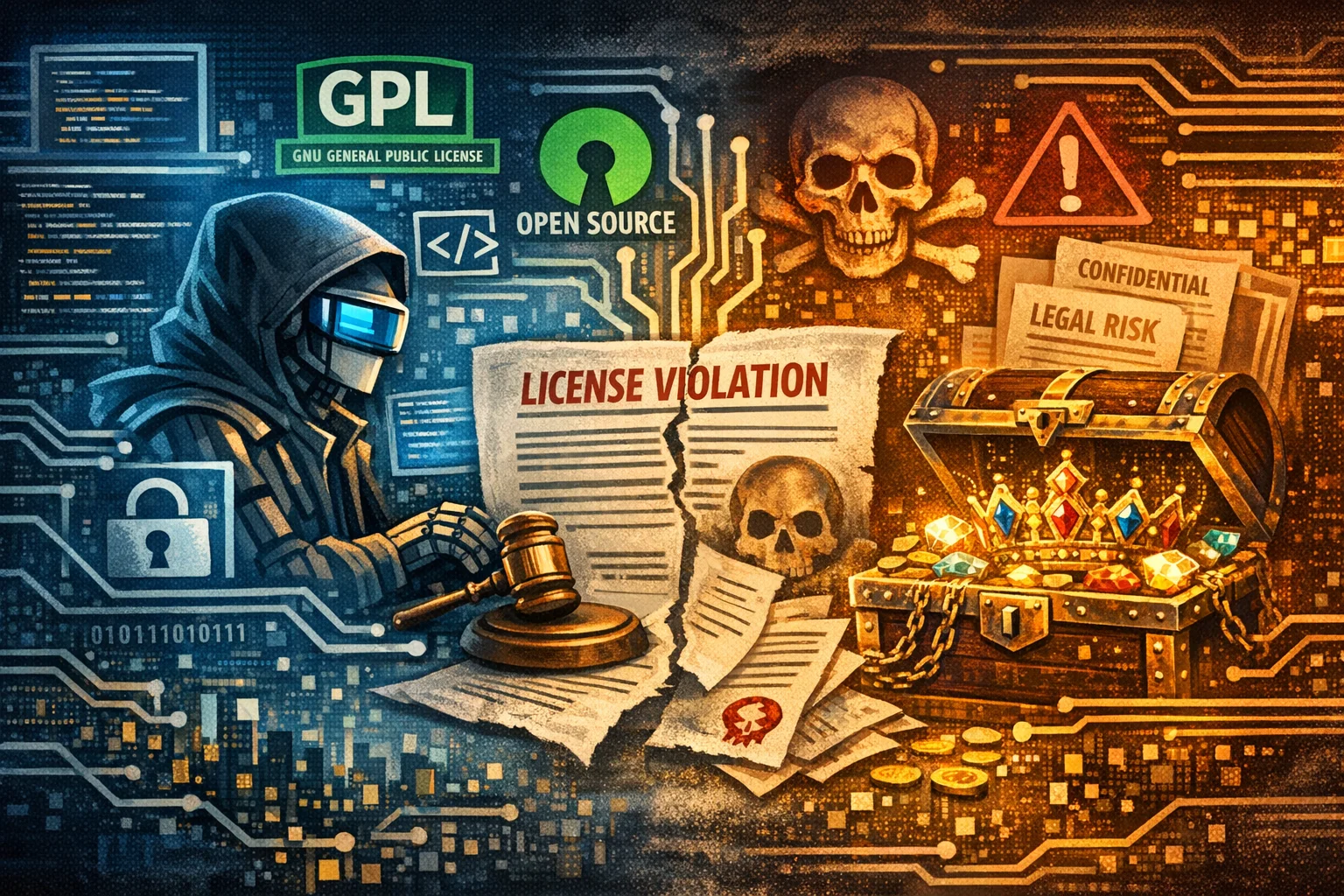
Weeks later, a compliance audit reveals a disaster. That "clever" snippet was actually copied almost verbatim from a repository licensed under the GNU General Public License, also known as the GPL.
In the legal world, the GPL is often called a "copyleft" or "viral" license. If you use GPL-licensed code as a part of your software, the license often requires that your entire program must also be licensed under the GPL. This means that by accepting one snippet of AI-suggested code, you may have just legally committed to open-sourcing your company's most valuable trade secrets. You didn't mean to do it, and the AI didn't warn you, but the legal consequence is the same. Your crown jewels are now public property.
Vibe coding is built on probability, not provenance. When an LLM generates code, it is essentially predicting the most likely sequence of characters based on everything it has seen. It does not provide a bibliography. It does not check for copyright. It does not tell you if that specific logic was pulled from a project with restrictive legal terms.
This creates a massive liability for the modern enterprise. You are essentially allowing a probabilistic machine to act as a junior developer who has no respect for intellectual property laws. For any company that values its IP, this is an unacceptable level of risk. You cannot afford to have your software supply chain poisoned by accidental license contamination.
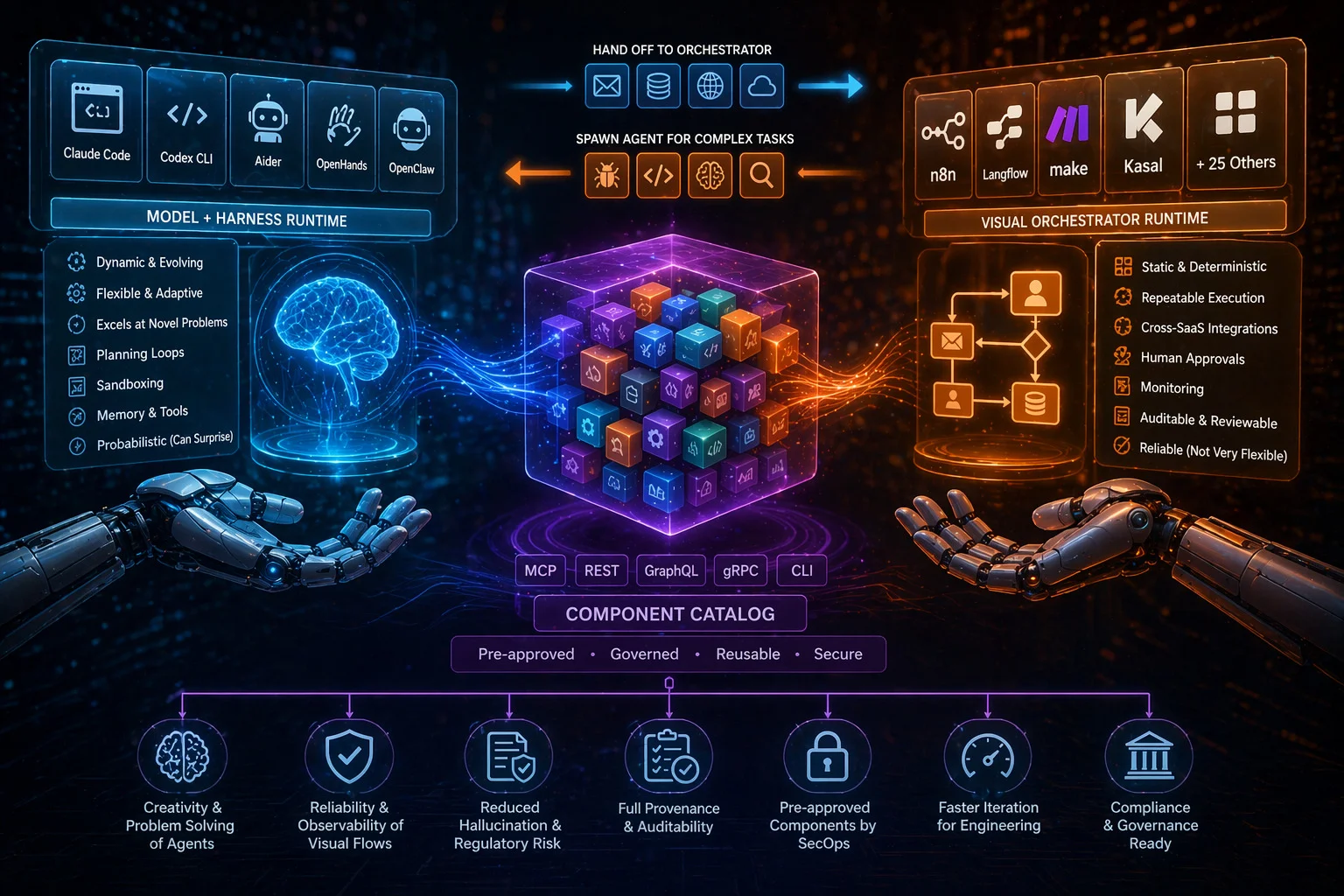
This is where the shift to vibe assembly becomes a strategic necessity. Instead of letting an AI hallucinate raw code blocks from an unknown origin, you move to an assembly model. In this setup, the AI is restricted to a catalog of pre-vetted, approved components.
These components are not "guesses." They are deterministic building blocks with a clear and verified history. When you pull a component from a factory that follows Google SLSA standards, you know exactly who built it, what license it carries, and that it has been scanned for security vulnerabilities.
If your developer needs to process that same complex data, the system does not "vibe" a new solution. Instead, it pulls a "Data Processor" component that your legal and security teams have already cleared. The AI still does the heavy lifting of connecting the dots, but it is working with safe, licensed materials.
The dream of AI-powered development should not be a nightmare for your legal team. Vibe coding is a brilliant tool for experimentation, but for production systems, it is a liability that breaks SOC 2 compliance and puts your intellectual property at risk.
By adopting an assembly model, you gain the best of both worlds. You get the incredible speed of AI orchestration combined with the rock-solid security of deterministic engineering. You ensure that your code remains yours, your licenses remain compliant, and your crown jewels remain protected. In an era where a single prompt can open source your entire business, the only safe way forward is assembly.
Like what you see? Share it with your friends.